- Email:info@psycare.it
- WhatsApp: +39 375 703 9065
Last September 2020, a memorandum of understanding was approved between the CNOP (National Council of the Order of Psychologists) and the Ministry of Education. After several years without regulations to regulate the profession of psychologist at school, finally, we’re here.
The context is well defined but evolving; the protocol authorizes and finances the presence of psychologists in schools in Italy. Even, possibly, with the online therapy; software dedicated to psychologists And psychotherapists can offer the necessary support and guarantees.
The guidelines for the promotion of psychological well-being at school They’re more than just suggestions; they’re a clear expression of interest in one of the most important topics being addressed and experienced during this pandemic.
To quote the protocol, the signed text affirms the role of the professional in the psychological field
…to deal with situations of insecurity, stress, anxiety due to excessive responsibility, fear of contagion, return to work in person, difficulty concentrating, situations of isolation experienced.
The school system, therefore, after an initial stage of loss of balance (inevitable), has reacted in an extraordinary way to theCovid-19 emergency; and it’s still responding. In the early days, many spontaneous and perhaps poorly organized initiatives arose; then, schools established a system with increasingly solid foundations: to provide continuous and competent support for educational interventions. All of this will continue for a period of time that cannot yet be defined, but which, predictably, will not be short.
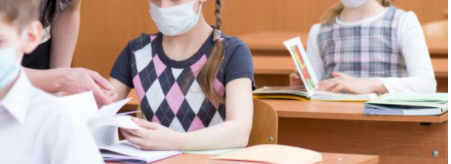
A couple of questions are common to all the reflections and the many sector studies started, concluded and in progress:
How are children and adolescents doing? How did they experience lockdown, and how will they experience the resumption of classes and social life amidst the pandemic?
The agreement between the Ministry of Education and the CNOP aims to promote activities of psychological support. The goal? To cope with situations of fear of contagion, insecurity, anxiety, stress, difficulty concentrating, and isolation. Isolation experienced and still ongoing, which will likely need to be supported with online therapy.THERAPEUTIC SETTING
School psychologist? It’s certainly nothing new.
The relationship between school and psychology has a long history that has unfolded, parallel to the evolution of the psychological discipline, over the course of about a century.
There school psychology It originated as a field of study in Western Europe and the United States. The term was first used in 1898 in an article by Munsterberg, referring to a professional who plays a consultancy role, positioned between the developmental and experimental psychologist and the classroom teacher. The expression first appeared in a printed text in 1910. school psychologist: Stern says schools need childcare services assessment provided by psychologists. And a figure begins to emerge which, today, if we look closely, she is now over a hundred years old.
In 1948, in the USA, division 16 of the APA (American Psychological Association) was born, dedicated to school psychology. In those years, school psychologists were mainly concerned with psychodiagnostic assessments; their aim was to identify the difficulties and special needs of children and young people.
Then, in 1969, the NASP (National Association of School Psychologists) was founded which, together with the APA, supported the founding of the International School Psychology Committee (ISPC), later converted to ISPA (International School Psychology Association).
The first countries that, at European level, have developed services school psychology Denmark, Sweden, the United Kingdom, and France were the first to do so. And they immediately adequately integrated psychology into highly structured, multidisciplinary school systems.
In short, the rest of Europe is moving forward: here it is school psychologist It no longer remained an idea; the figure has taken shape as a professional who works regularly and systematically within the educational environment.

In Italy, however, the school psychologist is not yet a permanent figure.
Compared to the rest of Europe, Italy, on the other hand, has been the protagonist of a series of legislative maneuvers that for many years have not found particular diffusion or concrete application.
In 1969, finally, with a Decree of the President of the Republic, provision was made to integrate the teachings of school psychology within the degree courses dedicated to the humanities and pedagogy (Presidential Decree 21 January 1969, no. 242); then, the 1978 Health Reform established the creation of teams of Local Health Units.
It wasn’t until the 1990s, however, that psychologists began to be included in schools through CICs (Information and Counseling Centers) for prevention, education, and health promotion activities. These CICs were initially established as counseling centers.
However, the legislative proposals that had been developed up to that point had not materialized. Although they served as a pretext for an informed reflection on the functions and resources of the psychologist at school; they have not brought about the concrete and effective inclusion of psychology in Italian schools. At least not as hoped.
In fact, in Italy, psychologists’ presence in schools is limited to occasional, brief consultations; when therapists intervene, they work simultaneously in multiple institutions on limited-term contracts.
First, they are called upon to respond to requests for learning enhancement and student orientation activities. Then, they implement interventions aimed at parents (projects, consultations, conferences, training courses) and activities aimed at classes. In a few cases, they also manage the organizational aspects of the entire school.
Subsequently, in Italy, initiatives continued to establish the figure of the school psychologist; in 1997, the Bassanini Law was introduced. Law 59/1997 granted schools the autonomy needed to request the activation of projects by freelancers.
Several bills to establish the role of school psychologists have been introduced in Parliament, but for a long time they have not received official approval.
A fundamental step: the psychologist is always present at school
Just last May, an initial initiative by the CNOP (National Council of the Order of Psychologists) came to fruition; the idea of funding psychological support services in schools for the restart of the 2020/2021 school year is now a reality.Law 17 July 2020, n. 77, article 231).
In August the Memorandum of Understanding dedicated to the start of the school year was finalized; a first effective agreement was reached (Article 6 of the Ministerial Decree of 6 August 2020). This led to the signing of a Memorandum of Understanding between CNOP and the Ministry of Education in September, aimed at activating psychological assistance for schools nationwide.
THERAPEUTIC SETTING
Even the psychologist studies at school. And he returns to the classroom.
Numerous studies have been conducted over the past few months, examining the potential and potential impacts of the pandemic. All have highlighted the need to pay greater attention to school-age children, from infancy to adolescence.
In normal times, childhood distress is already largely submerged. Today, according to data from Global Mental Health, approximately 20% of young people up to the age of 18 experience psychological problems (Kieling et al. 2011); and these represent the leading health problem in this age group.

Psychological distress impacts an individual’s overall development, behavior, and relationships; more generally, it impacts how we structure ourselves to face life. A comprehensive study isn’t needed to confirm this; but, if there were any doubts, the research supports it. It’s therefore alarming to learn, as the first studies conducted this year in China (Zhou et al. 2020) have shown, that 43.7% of young people developed depressive problems and 37.4% anxiety during the pandemic.
These, among others, are the important considerations that led the United Nations to draw governments’ attention to these issues and the need to support younger people (statements of April 8 and May 13, 2020) and, in Italy, through the Istituto Superiore di Sanità, to adopt guidelines for psychological support for minors during the pandemic (ISS, May 31, 2020).
From nursery school to university, intervention contexts are therefore characterized by specificities that require the community school psychologist to adapt his or her skills. psychologist at schoolIn short, he will have to be prepared for the new challenge; he will be much more present than in the past, as a point of reference and support.
THERAPEUTIC SETTING
Psychology class at school has just started
History reminds us that major crises (wars, natural disasters, epidemics, famines, pandemics) have always provided an excellent breeding ground for all those innovations that, once the crisis is over, will become part of our daily lives.
In the age of Coronavirus, the psychologist at school It’s as important as masks. But it’s not disposable.
And if he cannot be present, we must not forget the support that can be received by taking advantage of new software For online therapy which allow therapy to be managed remotely.
In this year that will remain in history, the COVID-19 It has dramatically tested everyone. At the same time, it is offering (albeit at a high price) the opportunity for profound innovation: in the Italian school system and in our way of life.
Today more than ever, the figure of the psychologist at school it’s not just a background figure, it’s the frame of the picture. It is what gives stability and support.
The psychologist at school, Today, it is only the first of that series of aids that will successfully lead our children to the new scholastic goal, in an obstacle course revisited due to the pandemic.
But it’s the most important. And it shouldn’t be lost sight of.

PsyCare for the Environment