- Email:info@psycare.it
- WhatsApp: +39 375 703 9065
20 Feb
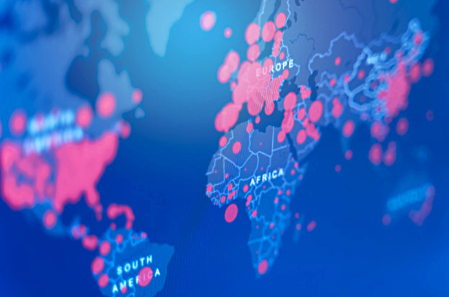
"The psychopandemic It's not a joke, nor an invention of psychologists, it's a reality, and it's clear to everyone that there is a long wave of discomfort and psychological disorders that will last for years and affect significant portions of the population."
Thus the president CNOP Lazzari, May 19th.
Last April, among other relevant activities, the National Council of the Order of Psychologists launched an awareness campaign on the topic of psychological repercussions of the Covid-19 pandemic. Just to give the problem its due weight.
This is an extremely delicate historical moment, and not just in a manner of speaking. A dramatic moment, unlike anything modern, technological society has ever experienced: panic attacks, increase in fear, anguish, vicarious trauma and other psychopathological difficulties. The repercussions for each of our futures will be considerable..
Psychopandemic: what do they say?do you study them?
The psychopandemic, therefore, must also be analyzed.
From the preliminary results of a study conducted on a representative sample of the population and promoted by the European Office of the World Health Organization (OMS) entitled ‘Monitoring knowledge, risk perception, preventive behaviors, and trust for an effective pandemic response‘, It emerges that one in three Italians has avoided going to the doctor for a problem not related to Covid and over half reports signs of psychological distress. The project involves over 30 countries and involves periodic surveys using a questionnaire to understand, over time, how citizens and communities are responding to the coronavirus pandemic, which has been impacting our lives for over a year now.
In a recent investigation by the Study Center of the Order of Psychologists 47% of parents with children aged 3-14 show emotional problems, and in 62% of cases they show negative psychological states in their children.. Among adolescents, 6 out of 10 declare that they feel stressed and one in three would like psychological support (Unicef 20.11.20).
Another study conducted within the Department of General Psychology at the University of Padua, in collaboration with researchers from the IRCCS Santa Lucia in Rome, investigated the psychological effects of the lockdown on memory, concentration, attention, and activity planning. The published results highlighted a general deterioration in cognitive functions, accompanied by a relative improvement in memory and a relationship between cognitive functioning and psychological aspects.

The psychologist to fight the psychopandemic
Independent surveys conducted in various countries have therefore converged in stating that one in three people today needs psychological counseling and support, also to prevent the development of more serious and costly disorders. And fortunately, common sense helps: Seven out of ten people in these cases prefer psychological help to medication (McHugh 2013). Furthermore, psychotherapy has been shown to be more effective and longer-lasting in most of these situations (Huhn et al. 2014, Cuijpers et al. 2014, Lazzari 2020). This is an important finding..
Psychological interventions have a restructuring effect because they promote people’s resources, thus preventing possible relapses. These are significant differences that are especially noticeable in the medium and long term (Harryotaki et al. 2014, Zhang et al. 2018).
Epidemiological data on this matter are still being collected and analyzed, but it is more than likely that the younger age group was certainly the one most affected by the pandemic. And to do so psychology at school It is no longer just a distant alternative: it is now a concrete solution to an important problem.
However, it is difficult to narrow down a problem so widespread across the general population; a comprehensive analysis would certainly require more time.
How to react to the psychopandemic?
If common sense guides us, technology will help us; to quickly reach the end of this long tunnel, tired but renewed, we must work a little harder:
- It is our duty to face this difficult moment without getting carried away by impatience and aggression
- It is essential to try to remain positive and proactive in daily activities, respecting the rules, in a calm and controlled manner
- It is essential to use the tools that technology makes available also for psychological support.
The condition of stress and anise We’ve all experienced the state of forced solitude we’ve faced and are trying to overcome with the vaccination campaign. It must be overcome and shouldn’t be experienced with negative attitudes or attitudes that are harmful to our health (mental and physical). On the contrary, using technology, which is available to us at all times, we can maintain friendships and interactions, even if in virtual form. And the online psychology It is one of the new established virtual realities available to and supporting the community.
Technology will continue to be one of the primary and most effective supports for our new daily lives; both in personal and medical relationships. This same technology has allowed us to anticipate the development of telemedicine, which today, fortunately, can reach everyone’s homes, setting in motion a seamless integration process.
The telemedicine It’s part of everyday life and the benefit is undeniable.
The Covid-19 pandemic has been classified as psychopandemic, because it not only limits physical conditions, but affects everyone’s psyche; a psyche that during these months has been extremely affected and tested; and which needs to be healed.
LThe wound this dramatic situation will leave on the psyche will not be easy to heal. And, unfortunately, the scar will be permanent..
But we can still intervene to limit the damage.
GDPR and Regulations for Psychologists
WhatsApp: +39 375 703 9065
General Inquiries: info@psycare.it
Support: help@psycare.it
Follow Us
Support
Initiatives

PsyCare for the Environment
We offset CO₂ emissions by planting a tree for every activated subscription: learn more.